Gardening Group
Jackwood House Garden
Saturday, 18th July 2026
Despite the continuing high temperatures, with grass everywhere turning dry and yellow, our wildlife-friendly garden is thriving.
As our eight volunteers worked their way around the garden—cutting back vigorous growth along the edges, trimming the grass, tackling persistent bindweed and carrying out general maintenance—they found themselves surrounded by wildlife. Every flowerbed seemed alive with movement. Insects buzzed and fluttered around our heads before settling on the blooms, while others were discovered amongst the leaves and leaf litter beneath our feet.


The star of the day wasn't actually a butterfly at all, but the spectacular Jersey Tiger Moth. This striking day-flying moth, with its chocolate-brown forewings and brilliant orange hindwings, is becoming an increasingly welcome sight and is always a highlight in our wildlife garden, with children and their families often surprised to learn of its true identity.
Sharing the flowers was the delicate Green-veined White Butterfly, a familiar visitor to wildflower gardens and meadows. Easily recognised by the network of greenish veins on the underside of its wings, it was busily feeding on nectar before continuing its search for suitable plants on which to lay its eggs.
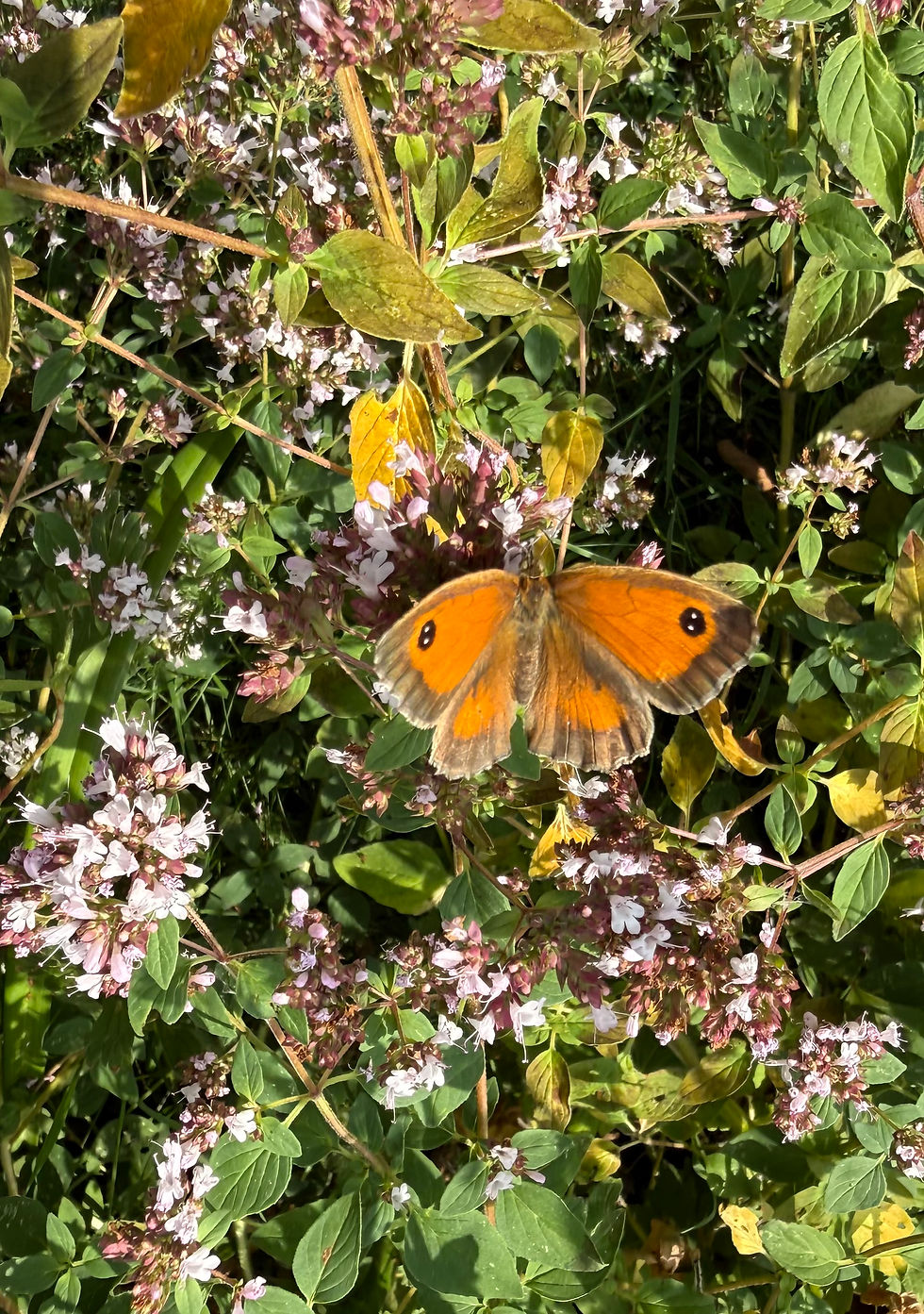
We were also delighted to see large numbers of our most familiar summer butterflies, the Gatekeeper. With its rich orange-brown wings edged in dark brown and distinctive black eyespots, it is a regular visitor to meadows and woodland edges, where it feeds on a wide variety of summer flowers.
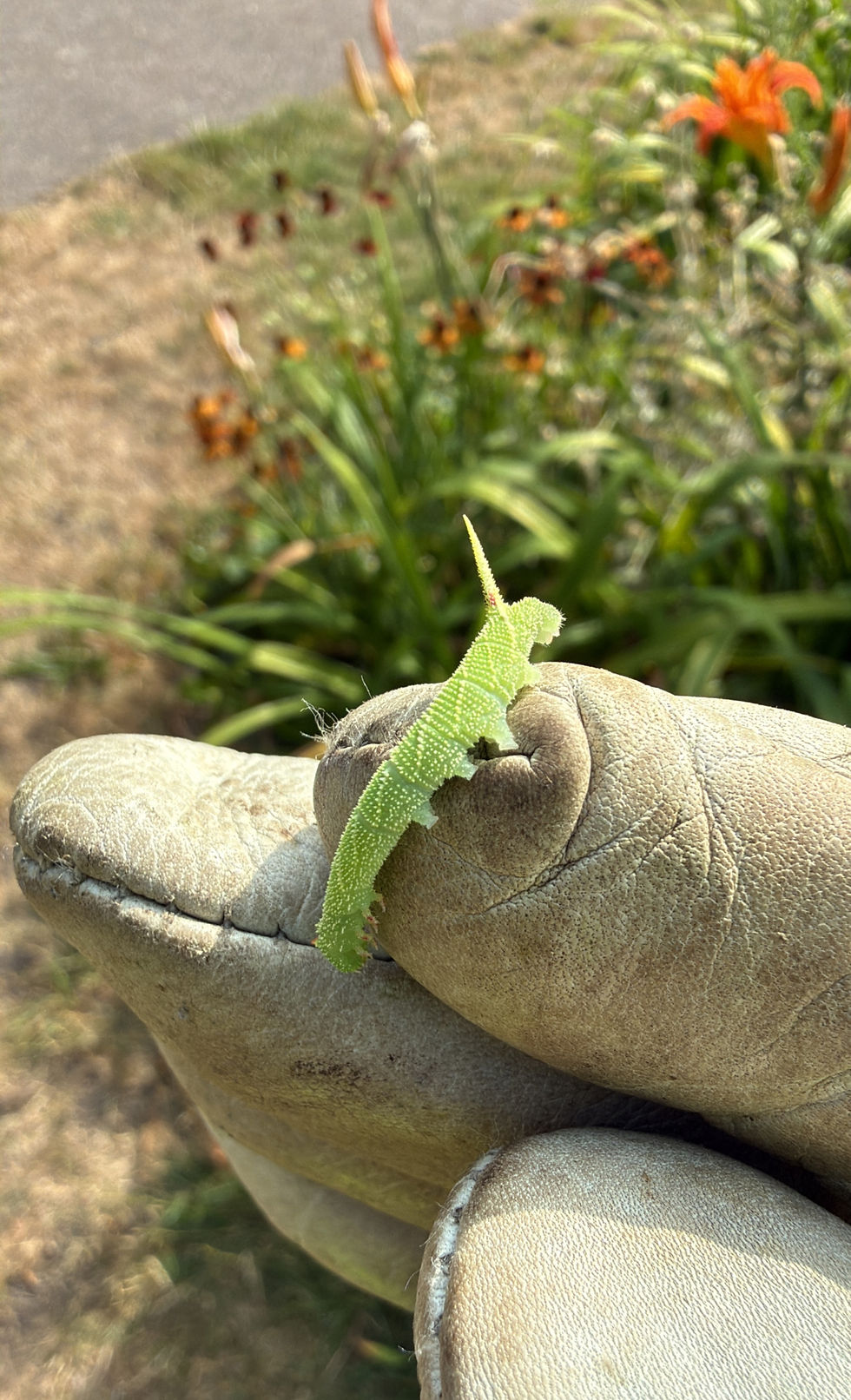
Closer inspection of the flowerbeds revealed a magnificent Lime Hawk-moth caterpillar. This bright green larva, complete with its characteristic tail horn, will eventually transform into one of our largest and most beautiful moths. As well as helping recycle plant material, this caterpillar provides an important food source for birds and other predators, making it a valuable part of the woodland food web.

Not all of our discoveries had wings. Some visiting children, to their great excitement, spotted a Dock Bug and we helped them identify it using our iNaturalist App.
This bug feeds mainly on dock and sorrel plants . Although easily overlooked, it plays its own important role, becoming food for birds, spiders and other wildlife.
Although some flowers are now past their colourful peak, with petals fading and seed heads beginning to develop, as you can see, they remain incredibly valuable for wildlife. Many still provide nectar and pollen for bees, butterflies, hoverflies and other pollinating insects, while the ripening seeds will become an important food source for birds a little later on. The stems and seed heads will also offer shelter for countless invertebrates throughout the autumn and winter.
It is a timely reminder that a wildlife-friendly garden doesn't have to look perfectly manicured to be successful. By allowing nature to take its course, even for a little longer, we continue to provide food, shelter and breeding opportunities for an astonishing variety of wildlife—and every volunteering session brings another exciting discovery.


