Woodland Conservation Group - Fridays
Jack Wood
31st July 2026
As July draws to a close, the busiest part of the bird breeding season is largely behind us. Most woodland birds have now successfully fledged their young, allowing us to move away from working on paths, verges and meadows and back into the heart of the woodland. By waiting until this important stage of the breeding season has passed, we can carry out essential habitat restoration while minimising disturbance to nesting birds.
This session, our 16 volunteers followed the Green Chain Walk to the point where it divides just before Castle Wood Meadow, where we split our efforts between two work areas.
Bringing Light back to the Woodland Floor
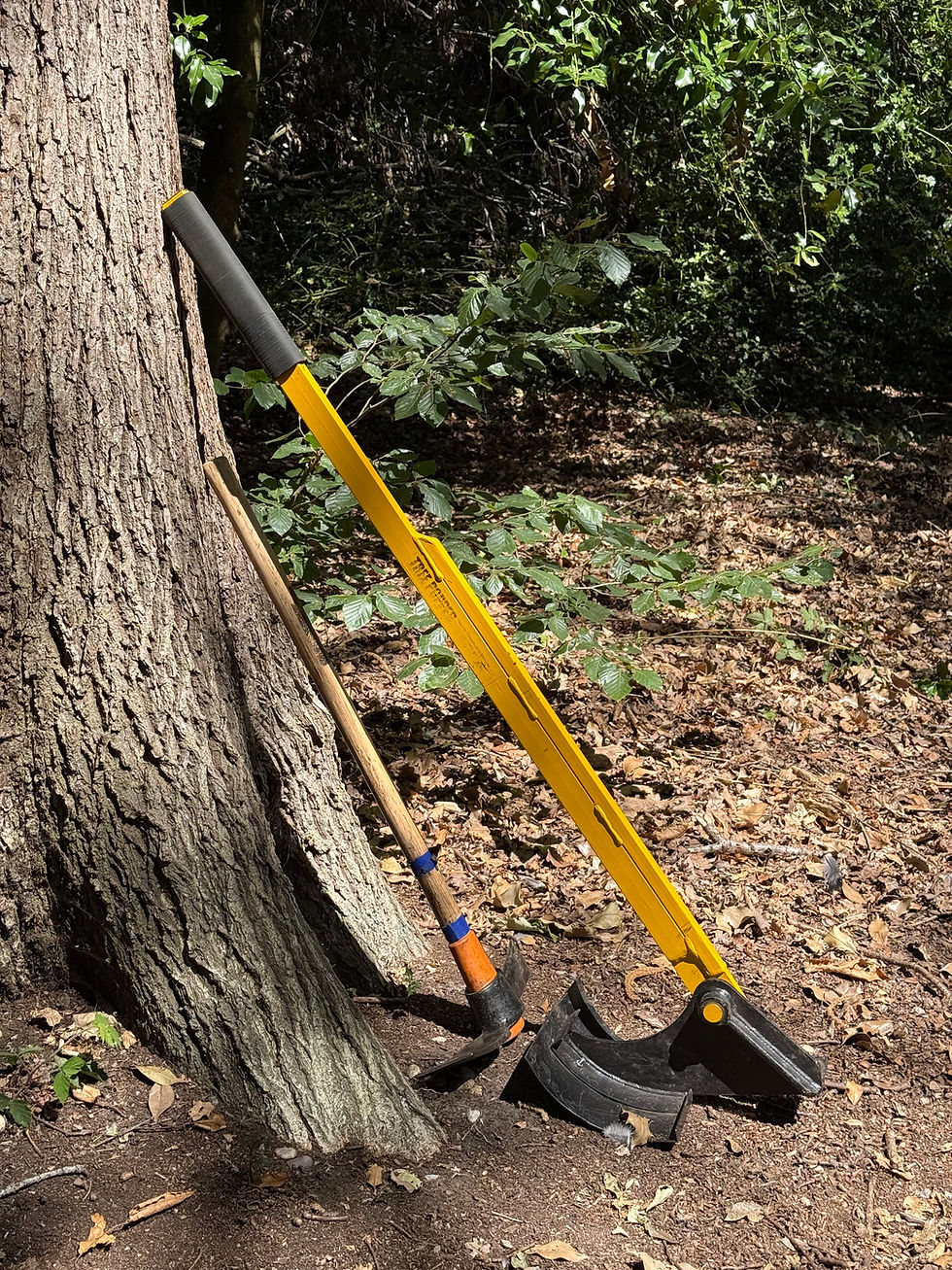
Our first task was within the protected area between the Green Chain Walk and Middle Path. Here, we continued our long-term work to increase the amount of light reaching the woodland floor by removing invasive cherry laurel, together with carefully selected holly that had become dense enough to shade out many of the woodland's smaller native plants. Allowing more light to reach the ground encourages a richer variety of wildflowers, grasses and young trees to flourish, creating a more diverse habitat for insects, birds and other woodland wildlife.
Nothing goes to waste. The cut branches were trimmed into manageable lengths and woven into the existing dead hedges surrounding the site. These natural barriers help protect sensitive restoration areas while also providing valuable habitat and shelter for insects, small mammals, amphibians and birds. There's still plenty more to do here, so we'll soon be returning to continue the work.
Winning the Battle against Bracken
Our second team tackled the slope between Middle Path and Lower Path, where we continued removing fresh bracken growth since our last visit. Repeated pulling weakens the plant over time by reducing the energy stored in its underground rhizomes, helping to prevent it from overwhelming more delicate woodland plants. By removing the fronds before they mature and release spores, we also limit one of the ways bracken can spread.
Thanks to two earlier visits this year and the determined efforts of six volunteers, every visible frond had been cleared from this area by our tea break—a satisfying result.
After a well-earned rest, four volunteers headed back along our route to begin tackling another impressive stand of bracken at the edge of the formal garden area. The towering fronds were beginning to engulf even a vigorous bramble hedge. Bracken really is an extraordinary plant, and one that constantly reminds us that woodland management is an ongoing process rather than a one-off task.

Being in the Woodlands
It was wonderful to be back beneath the woodland canopy, improving these habitats for wildlife. Every session brings its own discoveries. Alongside the insects, birds and other woodland creatures we encountered, we also unearthed some rather less welcome finds—a flattened steel pail that had clearly been buried for many years plus some more recent additions, including two dining chairs and the metal frame of a garden table.

It seems someone else enjoys spending time in nature—but this certainly isn't something we want to find in a Site of Special Scientific Interest. Thankfully, our volunteers ensured these unwanted items were removed for recycling, leaving the woodland a little healthier and a little wilder for both wildlife and future visitors.

